TIME reported these findings from Gerba in 2017. The bathroom study was unpublished at that time.
Think beyond the face wash.
TIME’s 2017 article reports microbiologist Charles Gerba’s findings: nearly 90% of bathroom towels were contaminated with coliform bacteria and about 14% carried E. coli. It explains that towels can support microbial growth because they’re often damp, warm and absorbent. The bathroom-towel study was unpublished when the article appeared.
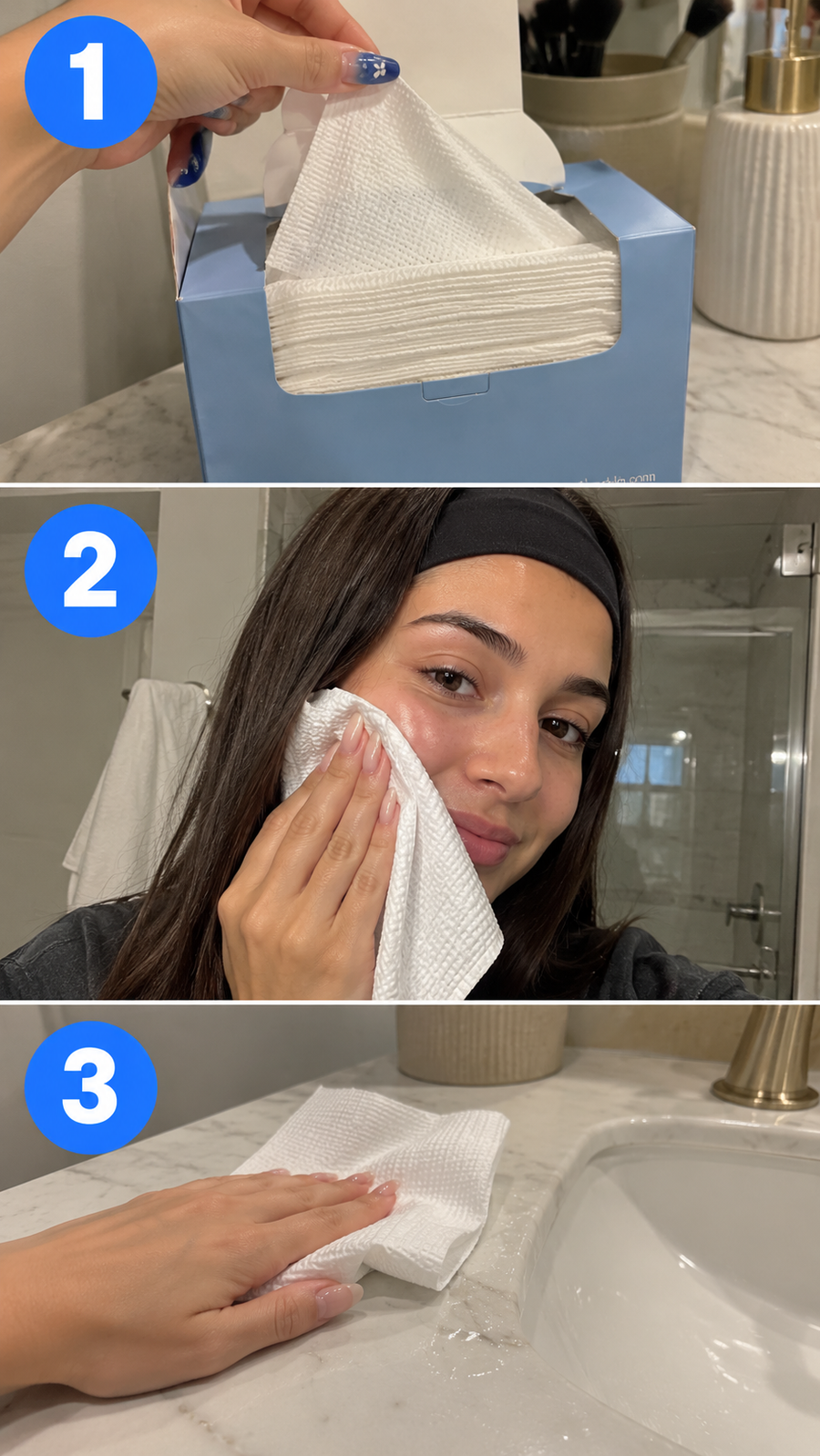
A fresh sheet makes the choice simple.
When you’re trying to help your child manage breakouts, it’s easy to focus on the cleanser and forget what touches their face afterward. Acne involves hormones and clogged pores, while rubbing can irritate acne-prone skin. A fresh, soft cotton face towel and gentle patting can keep the drying step clean and gentle alongside their acne-care routine. These towel findings measured contamination, not acne outcomes; they don’t establish that coliform bacteria cause acne or that disposable towels treat it.
Study context & source notes +
Source: Abigail Abrams, “Your Towels Are Way Dirtier Than You Think,” TIME, September 21, 2017. These sample findings do not establish acne causation or ClearSkin’s effectiveness. Gerba is a microbiologist, not a dermatologist endorsing this product.
A clean, properly washed and fully dried reusable cloth is also a valid choice. The practical difference here is single-use convenience.
Read the TIME article ↗

 01